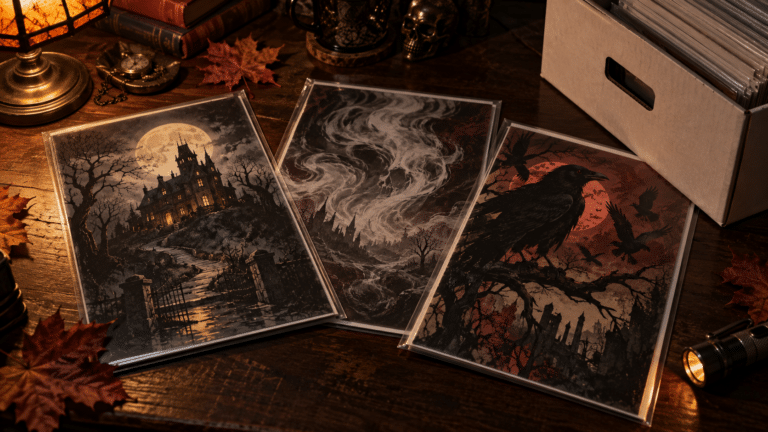
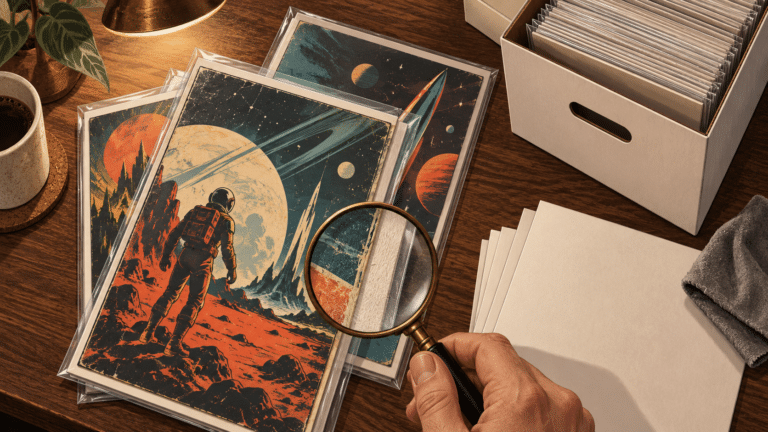
Starting a comic book collection does not require a huge budget or a stack of expensive “key” issues. The safest approach is to choose a narrow collecting goal, set a monthly spending limit, learn basic condition grading, and compare actual sold prices before buying. Start with comics you genuinely want to own. Value can change; enjoyment is the part you get to keep.
Start with a collecting lane—not a shopping spree
The fastest way to waste money is to buy anything labeled “rare,” “hot,” or “investment.” Before spending, choose one lane you can explain in a sentence:
- A favorite character, writer, or artist
- One complete story arc or limited series
- A publisher or era
- Affordable first appearances and key issues
- Cover art by a specific artist
- Horror, science fiction, superhero, or independent comics
- Nostalgia from a show, game, toy line, or movie you already love
A narrow lane makes comparison easier and protects you from random impulse purchases. You can always expand later.
Make a short want list
Write down 10–20 books you would be happy to own. Record the exact title, issue number, publication year, preferred edition or cover, acceptable condition, and your maximum all-in price. “All-in” means the comic, shipping, tax, buyer’s premium, and any other fee.
That last number matters. A $6 comic with $8 shipping is not a $6 purchase.
Give yourself a starter budget
There is no universal minimum. A practical first month could be $25, $50, or $100, depending on your finances. Divide it instead of spending it on one unresearched book:
- About 70% for comics on your want list
- About 20% for bags, boards, and storage
- About 10% held back for shipping or an unexpected find
This is a guardrail, not a rule. The important part is deciding your ceiling before an auction, convention, claim sale, or late-night marketplace search.
Compare sold copies—not asking prices
An asking price only tells you what a seller hopes to receive. To estimate a reasonable range, compare several recently sold copies of the exact same comic.
Match as many details as possible:
- Title and issue number
- Printing and publication year
- Cover or variant
- Raw versus professionally graded
- Grade and page quality
- Signature or certification
- Completeness, restoration, or major defects
- Shipping cost and sale format
Use multiple comparable sales rather than the single highest or lowest result. Exclude obvious mismatches, bundles, damaged copies, and sales with unclear photos. If there are few comparable sales, treat the book as harder to price—not automatically more valuable.
eBay recommends reviewing a seller’s rating, feedback score, and sales history when evaluating a seller. Its buying help also explains returns and how buyers can request help when an order does not arrive or is materially wrong. Read the actual listing and return terms before purchasing.
Learn enough grading to avoid expensive mistakes
Comic condition can dramatically affect price. CGC uses a 10-point grading scale, with 9.8 described as Near Mint/Mint and 9.4 as Near Mint. That does not mean every clean-looking raw comic is a 9.8.
For a raw comic, inspect:
- Spine ticks, color breaks, tears, creases, and missing pieces
- Corners and edges
- Staples and centerfold attachment
- Stains, moisture damage, odor, rust, tape, writing, or trimming
- Page color and brittleness
- Restoration or repairs
- Whether inserts, posters, coupons, or other components are present
Photos should show the front, back, spine, corners, and any defects. Ask for more photos when necessary. If a seller assigns a grade but the images disagree, buy based on the evidence you can see.
Condition grading has judgment involved. Leave room in your offer for uncertainty.
Raw or graded: choose based on the job
Raw comics usually provide more book for the budget and let you read the copy. Professionally graded comics provide an independent grade, tamper-evident holder, and certification record, but the grading and market premium can increase the price.
A beginner does not need slabs to have a legitimate collection. Graded copies make the most sense when authentication, restoration detection, consistent condition, or resale liquidity matters enough to justify the premium.
For CGC books, enter the certification number in CGC’s verification tool before buying. CGC says the lookup can confirm the description and help identify whether a holder may have been altered. The database is useful evidence, but you should still compare the slab, label, and listing photos carefully.
Watch the words that trigger overspending
These terms can describe real features, but none guarantees value:
- “Rare”
- “Key”
- “Hot”
- “Low print run”
- “First appearance”
- “Exclusive”
- “Ratio variant”
- “Signed”
- “Investment”
- “Newsstand”
- “Error”
Ask what the claim specifically means and where it can be verified. A 1:100 retailer incentive describes an ordering mechanism; it does not prove the book is scarce today or that demand will last. A certificate of authenticity is only as trustworthy as its issuer and chain of custody. A signature can add personal appeal without guaranteeing a financial premium.
Buy affordable runs before chasing trophy books
Lots, reader copies, later printings, reprints, facsimile editions, and lower-grade originals can be excellent starting points. They let you learn publishers, creators, storylines, and condition without concentrating the budget in one item.
When buying a lot, calculate the price per book—but also count how many books you actually want. Twenty comics for $30 is not a bargain if eighteen become unwanted storage.
You can begin with current single issues and affordable variants from Nostalgik Vibes comic selection, then use broader marketplace searches when the store does not have the title or run you need.
Nostalgik Vibes may earn a commission from qualifying purchases made through eBay links, at no additional cost to you.
- Browse beginner comic-book collections on eBay
- Browse comic-book starter lots on eBay
- Browse comic bags, boards, and storage boxes on eBay
Search results and availability change. Confirm the exact item, seller, condition, shipping, and return terms before purchasing.
Protect the books you already bought
Preservation is cheaper than replacing damaged comics. The Library of Congress recommends clean hands and a clean work area, keeping food and drink away, avoiding tape, glue, rubber bands, paper clips, and folded corners, and not opening a comic more than 180 degrees.
For storage, the Library of Congress recommends a cool, relatively dry, clean, stable environment with minimal light and no direct or intense light. Avoid attics, basements, vents, radiators, and areas at risk of leaks or large temperature swings. Use supportive, preservation-quality enclosures.
For most modern collections, correctly sized comic bags, acid-free backing boards, and sturdy boxes are a practical baseline. Do not force an oversized or fragile comic into a tight bag.
Keep a simple collection record
A spreadsheet or collection app can prevent duplicate purchases and expose how much you are actually spending. Track:
- Title, issue, publisher, and year
- Cover or printing
- Raw or graded condition
- Certification number when applicable
- Purchase price, shipping, tax, and total cost
- Seller and purchase date
- Storage location
- Notes about defects or provenance
- A photo of the comic
Do not update the value every week. Review occasionally using comparable sales, especially before insuring, selling, or upgrading an expensive book.
A five-step rule for every purchase
Before you click Buy, bid, or claim:
- Is it on your want list?
- Have you checked several comparable sold copies?
- Do the photos support the stated condition?
- Is the total price under your pre-set ceiling?
- Will you still be happy owning it if the market price falls?
Five yes answers do not guarantee profit. They do make regret less likely.
Frequently Asked Questions
How much money do I need to start collecting comics?
There is no required amount. Begin with a monthly limit you can comfortably spend after necessities. Even $25–$50 can cover several affordable reader copies or modern issues plus basic supplies.
Are raw comics a bad investment?
Raw comics are not automatically a good or bad investment. They can be the better value when you want to read them or when the grading premium is not justified. The risk is greater uncertainty about condition, restoration, and completeness, so inspect carefully and price that uncertainty into the purchase.
Should a beginner buy key issues first?
Only if the issue fits your collecting goal and you understand its condition and recent comparable sales. Affordable runs and favorite stories usually teach more—and spread risk better—than immediately concentrating the budget in one expensive key.
Are variant covers automatically valuable?
No. A variant’s ordering ratio, exclusivity, or finish does not guarantee lasting scarcity or demand. Buy the art or edition because you want it, then verify actual sales before paying a premium.
What is the best way to avoid overpaying?
Use a precise want list, compare multiple sold copies matching the same edition and condition, calculate the all-in cost, and set your maximum before bidding. Walk away when the evidence does not support the price.
The takeaway
A good first collection is focused, affordable, protected, and personal. Build around comics you care about, learn condition slowly, verify expensive claims, and use sold-market evidence instead of hype. The goal is not to win every auction. It is to enjoy owning the books without regretting what you paid.