Affiliate disclosure: If you buy through an eBay link on this page, Nostalgik Vibes may earn a commission at no extra cost to you.
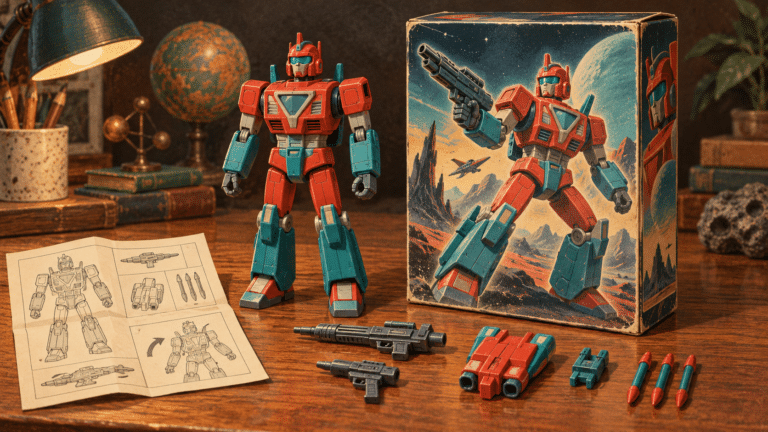
The difference between a boxed toy and a loose one is more than the cardboard. Accessories, instructions, repairs and packaging condition all affect what you are actually buying. There is no reliable price multiplier that applies to every toy.
What the Labels Tell You
- Complete in box (CIB): The toy, its box and complete contents. Ask what the seller counts as complete, including inserts and instructions.
- Boxed: Packaging is included, but completeness has not necessarily been established.
- Loose complete: Outside the original packaging with the stated accessories included.
- Loose: Outside the original packaging; accessories may be included or missing.
- Factory sealed: A separate claim about the original seal. CIB does not mean sealed.
Abbreviations such as MIB and NIB are used inconsistently. Read the full description and photos, and ask about opened packaging, replacement parts or resealing.
Compare Like-for-Like Copies
Start with the exact release, maker, size and variant. Then compare the toy’s wear, working condition, accessories and packaging separately. A box is not proof of authenticity, and a sealed electronic toy may be untested.
For a price comparison, use several recent completed sales with matching details. Record the sale date, shipping charge and any missing parts. A high asking price is not evidence that someone paid it. eBay’s pricing guide explains using comparable completed listings.
A Photo Checklist
- All included pieces laid out together
- Maker marks, date markings and any labels
- Joints, paint wear, stains or repairs
- Box corners, flaps, inserts and seal areas
- For electronics, battery compartment and a description of what was tested
Choose for Your Collection
If original packaging is part of your childhood memory, a boxed example may be worth seeking out. For a shelf display, a loose figure with the accessories you want may fit better. Set your budget around the item you will enjoy; packaging does not guarantee future resale value.
Browse the Current Catalog
Browse current toy listings. Availability changes; examples in this guide are not a promise that a particular item is in stock. Check each listing for its exact contents and condition.
Explore related listings on eBay. These are external marketplace listings; review each seller’s item details and terms.
Updated September 2026.
By Beau Ferguson, Nostalgik Vibes.